Overview
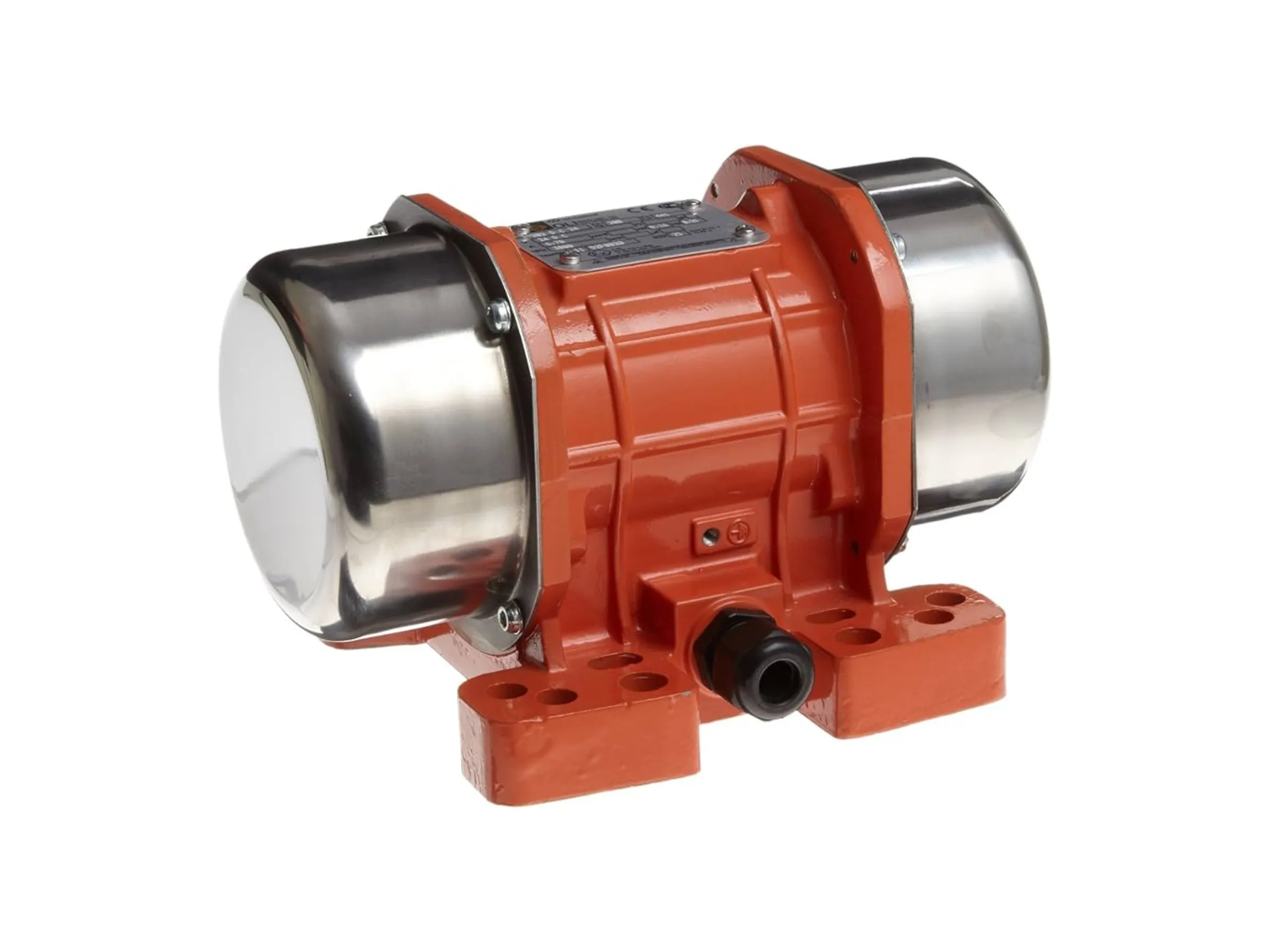
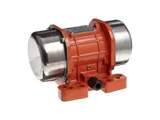
OLI is the worldwide leader in industrial vibration technology, and the MVE Series electric vibrating motors form the core of their product range. These motovibrators generate centrifugal force by rotating precisely calibrated eccentric masses mounted on the motor shaft. The resulting vibration is transferred directly to the equipment or structure the motor is bolted to — whether that is a screen, feeder, hopper, mould, conveyor or compaction table.
The range delivers centrifugal force output up to 26,000 kg with multiple voltage configurations, covering virtually every industrial vibration requirement from light-duty packaging and food handling through to heavy-duty mining screens and concrete compaction. All standard AC models are rated for S1 continuous duty, meaning they are built to run around the clock in demanding production environments without scheduled rest periods.
How Vibrating Motors Help Your Operation
Industrial vibrating motors solve a wide range of material handling and processing problems that would otherwise require manual intervention, additional machinery, or costly downtime.
In material flow and discharge, vibrating motors mounted on hoppers, bins and silos prevent bridging and ratholing — the two most common causes of material blockage. Rather than stopping a production line to clear a jammed hopper with manual prodding or air lances, a correctly sized vibrating motor keeps material flowing consistently and reliably.
On vibrating screens and separators, the motors provide the precise, controllable vibration needed to sort and classify bulk materials by particle size. Adjustable eccentric masses allow the operator to fine-tune the force output to suit the specific material characteristics, whether that is dry aggregates, wet slurry, food products, or recycled waste streams.
For concrete compaction, OLI high-frequency vibrating motors consolidate fresh concrete in precast moulds and formwork, removing trapped air to produce denser, stronger concrete with a superior surface finish. This is critical in precast concrete manufacturing where product quality and cycle times directly affect profitability.
In packaging and processing, vibrating motors drive compacting tables, filling machines, big bag densification systems and foundry shake-out frames. The consistent, repeatable vibration output ensures uniform product density, accurate fill weights, and efficient mould separation.
Key Features
The motors are constructed from either cast aluminium for lighter-duty and food-grade applications, or cast iron for heavy-duty mining, quarrying and construction environments. Both material options are engineered to withstand the sustained high-intensity vibration loads that would rapidly destroy a conventional electric motor.
Eccentric masses on each end of the motor shaft can be repositioned to adjust the centrifugal force output without changing the motor itself. This tunability means a single motor model can be optimised for different materials, screen sizes or compaction requirements simply by adjusting the mass setting during installation or commissioning.
Quick-fit terminal fasteners simplify electrical connections, reducing installation time and minimising the risk of loose connections caused by the motor’s own vibration. The multivoltage AC range spans 42 V through to 230/400 V three phase, accommodating Australian 415 V supply as well as lower-voltage control circuits used in some screening and batching plant configurations.
Specialised Models
For mobile and on-vehicle applications, OLI supplies DC vibrating motors operating on 12 V or 24 V supply. These are commonly mounted on truck hoppers, trailer bodies and mobile bins to assist with the discharge of sticky or compacted materials such as wet sand, clay, asphalt and grain.
For hazardous area installations, explosion proof and ATEX certified models are available for use in environments where flammable gases, vapours or combustible dust may be present. These certified units allow vibrating screens, feeders and discharge systems to operate safely in classified zones within chemical plants, grain silos, flour mills and coal handling facilities.
High-frequency models are purpose-built for concrete compaction, delivering the rapid vibration cycles needed to effectively consolidate concrete in thin-walled moulds and complex formwork where standard-frequency motors would not achieve adequate compaction.
Common Applications By Industry
Food and beverage — screening, grading, conveying and discharging dry, fresh and frozen food products; filling and compacting packaging; preventing blockages in ingredient hoppers and storage silos.
Mining and quarrying — driving vibrating screens and feeders for aggregate classification; dewatering screens; material discharge from bins and surge hoppers; scalping and grizzly screen applications.
Construction and precast concrete — compaction of concrete in moulds, formwork tables and precast production lines; material discharge from batching plant hoppers and cement silos.
Environmental and recycling — vibrating screens for waste classification and separation; material flow aids on recycling plant hoppers and storage bunkers; dewatering and filtration equipment.
Foundry and metals — shake-out frames for sand mould separation; compaction of refractory materials; conveying and screening of casting sand and metal shot.
Selection Considerations
Correct sizing of a vibrating motor requires matching the centrifugal force output and operating frequency to the specific application. Key factors include the mass and flow characteristics of the material being handled, the dimensions and weight of the equipment the motor will be mounted on, the required amplitude and direction of vibration, and the operating duty cycle. Undersized motors will not achieve adequate vibration, while oversized motors can cause structural fatigue or premature bearing failure in the host equipment.
For screening applications, consider whether single or paired motor configurations are needed to produce linear, circular or elliptical vibration patterns. For hopper discharge applications, motor placement and mounting angle significantly affect the efficiency of material flow.
Support And Enquiries
Motordrives Australia supplies the OLI vibrating motor range with stock available for fast fulfilment across Australia. Our team can assist with motor sizing, force calculations, mounting recommendations, voltage selection and application-specific guidance. For technical support or a formal quotation, contact us with your application details.